Somewhere along the way, Congress decided legislation should work like a junk drawer.
You know the one. You open it looking for a pen and instead find expired batteries, a mystery key, a takeout menu from 2009, and a single screw that might be holding your democracy together.
That is modern lawmaking.
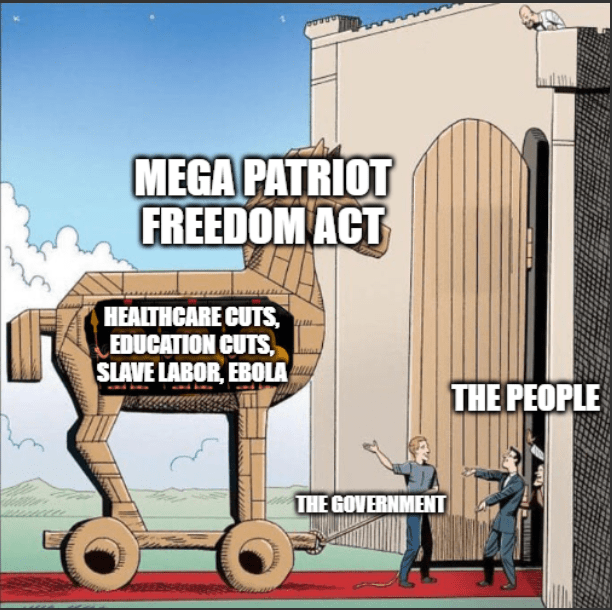
A bill starts with a name that sounds noble. Infrastructure. Defense. Relief. Safety. Freedom. Pick your favorite patriotic noun. Then, quietly, it becomes a legislative Trojan horse. Inside the shiny outer shell are dozens or hundreds of unrelated provisions that could never survive daylight on their own.
Everyone knows it. Everyone complains about it. Everyone keeps doing it.
Because this is how bad ideas get passed without being voted on.
If lawmakers had to vote on each policy individually, many of these provisions would fail instantly. So instead, they are duct taped to something “must pass.” Want disaster aid. Congratulations, you also just approved tax carve-outs, regulatory favors, and pet projects that have nothing to do with hurricanes, bridges, or national security.
This is not compromise. It is hostage negotiation.
And it is bipartisan. No party gets to pretend innocence here. Republicans stuff bills when it suits them. Democrats stuff bills when it suits them. Then both sides go on cable news to pretend they had no choice.
“We had to vote for it.”
“It was too important to fail.”
“It would have shut down the government.”
Funny how the solution to every manufactured crisis is always fewer clean votes and less transparency.
The defenders will tell you that governing is complicated. That bundling is necessary. That nothing would ever pass otherwise.
That is not an argument for stuffing bills. That is an admission the system is broken.
If a policy is good, it should be able to stand on its own merits. If it cannot survive debate, amendments, and a straight up vote, then it does not deserve to become law just because it was hiding behind something popular.
This practice destroys accountability. Lawmakers get to say they voted for the good thing while pretending the bad parts were invisible ink. Voters cannot tell who supported what. Lobbyists, however, know exactly where to aim.
And that is the point.
Stuffed bills reward insiders who track line items and punish the public who are told to accept the package or face catastrophe. It turns governance into a loyalty test instead of a decision making process.
Want to fix it. Here is a radical idea.
One bill. One subject.
No unrelated riders. No surprise provisions. No midnight additions. No thousand page monstrosities voted on by people who clearly did not read them.
If Congress believes a policy is necessary, let them defend it. Let them vote on it. Let them own it.
If a bill cannot pass clean, it should not pass at all.
Because laws are not supposed to be scavenger hunts. And democracy is not supposed to work like a junk drawer.

 The Political Middle Child
Leave a comment